Support
Coordinated healthcare, therapy and emotional support for the whole family make an enormous difference. Regular health checks — heart, thyroid, vision and hearing — help catch treatable conditions early.
Understanding Down syndrome
Down syndrome (Trisomy 21) is a naturally occurring chromosomal arrangement that has always been a part of the human condition.
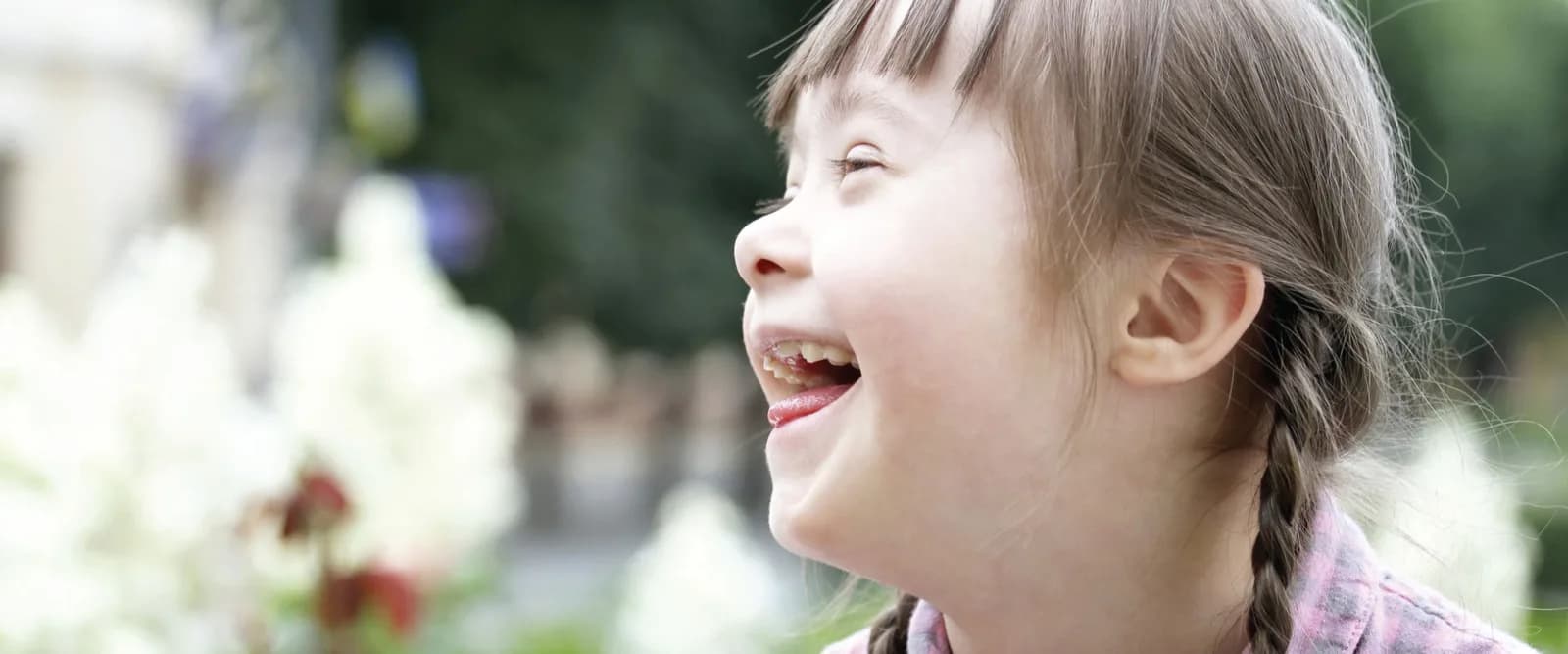
Down syndrome (or Trisomy 21) is a naturally occurring chromosomal arrangement that has always been a part of the human condition. It is universally present across racial, gender and socioeconomic lines, and affects approximately 1 in 800 live births, although there is considerable variation worldwide. Down syndrome usually causes varying degrees of intellectual and physical disability and associated medical issues.
It happens when a person has a full or partial extra copy of chromosome 21. There are three types:
Down syndrome is not caused by anything a parent did. It is not an illness, and it is not contagious. Find out more in our frequently asked questions.
Characteristics
Some characteristics are common, but no two people with Down syndrome are alike — each has their own personality, strengths and dreams.
Such as upward-slanting eyes and a single palm crease — but every person looks like their family too.
Common in infancy and improves with physiotherapy and active play.
Mild to moderate intellectual disability; strong visual and social learning.
Higher chance of heart, thyroid, hearing and vision conditions — most are treatable.
Living well
Coordinated healthcare, therapy and emotional support for the whole family make an enormous difference. Regular health checks — heart, thyroid, vision and hearing — help catch treatable conditions early.
Children with Down syndrome learn best with visual teaching, clear routines and encouragement. Under India's Rights of Persons with Disabilities Act, 2016, every child has the right to inclusive education.
Life skills such as cooking, managing money, travelling and working are learned step by step. Many adults with Down syndrome hold jobs, live semi-independently and contribute to their communities.
Families can apply for a UDID (Unique Disability ID) card, which opens access to government schemes, scholarships and concessions. Our Resource Referrals desk can guide you through the process.
Call our helpline on +91 828 101 7777 or send us a message — we're happy to talk with parents, relatives, teachers and students.
AI helper · ask me anything
Hello! I'm the ALAN T21 assistant. Ask me about Down syndrome, our services, donating or volunteering — or anything else you're curious about.