FAQs
Frequently Asked Questions
Answers to questions we are often asked. If you don't find what you're looking for, call our helpline on +91 828 101 7777 to speak to a member of our team.
Frequently asked questions
What causes Down syndrome?
Chromosomes are thread-like structures made of DNA and proteins. They are present in every cell of the body and carry the genetic information each cell needs to develop. Human cells normally have 46 chromosomes, arranged in 23 pairs. Twenty-two of these pairs are alike in males and females (the “autosomes”); the 23rd pair are the sex chromosomes, X and Y.
Cells divide in two ways. Ordinary cell division (mitosis), by which the body grows, produces two cells with exactly the same chromosomes as the parent cell. The second kind (meiosis) happens in the ovaries and testes, and produces eggs and sperm with half the number — 23 chromosomes instead of 46. A test that checks the number and type of chromosomes in a blood or skin sample is called a karyotype.
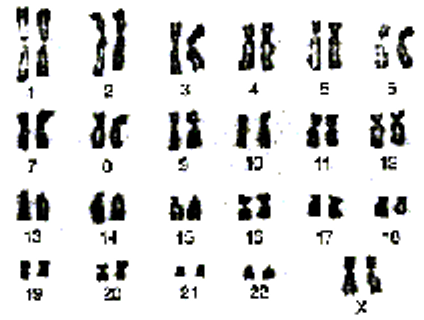
Down syndrome occurs because of the presence of an extra 21st chromosome. Each person inherits 23 chromosomes from their mother and 23 from their father; sometimes, by chance, one parent passes on an extra one. When the extra chromosome is number 21, Down syndrome occurs. The extra chromosome can come from either parent, so neither the mother nor the father should carry any blame for their child’s condition.

Researchers do not yet know what causes this error in cell division. The chance of having a baby with Down syndrome increases with the mother’s age, but most babies with Down syndrome (more than 85%) are born to mothers younger than 35, because more babies are born to younger mothers. Down syndrome can happen to anyone.
Is Down syndrome contagious?
No. Down syndrome is not contagious. It is not a disease, and it cannot be “cured” by medicine or surgery — it is a genetic condition that a person is born with.
What are the types of Down syndrome?
- Trisomy 21 (about 95%) — an error in cell division called non-disjunction means the fertilised egg has three copies of chromosome 21 instead of two, so every cell has 47 chromosomes instead of 46.
- Translocation (about 3–4%) — part of an extra chromosome 21 breaks off and attaches to another chromosome, usually chromosome 14, 21 or 22, so the total count may still be 46. Translocation can be inherited, so it is important to check the parents’ chromosomes to see whether either is a “carrier”.
- Mosaicism (about 1%) — only some cells have the extra chromosome 21, while others have the usual 46. This is thought to result from an error in cell division soon after conception.
What are the characteristics of children with Down syndrome?
Not every baby with Down syndrome has the same physical features, and each trait may be more or less noticeable. A doctor may suspect Down syndrome at birth; a karyotype test confirms the diagnosis. Common physical traits include:
- Low muscle tone (hypotonia)
- A flatter facial profile, with a small nose and flatter nasal bridge
- An upward slant to the eyes, with small skin folds at their inner corners
- Small, differently shaped ears
- A single deep crease across the palm
- Very flexible joints
- A little finger with one bending joint instead of two
- A wider gap between the big toe and second toe
- A tongue that is large in relation to the size of the mouth
About half of children born with Down syndrome have a heart condition, most of which can be corrected. Children with Down syndrome are also more prone to infections, breathing problems, eye problems, thyroid conditions, digestive problems in infancy and childhood leukaemia. Medical advances mean most of these are now treatable, and life expectancy has risen to around 60 years.
Children with Down syndrome keep gaining physical and mental skills throughout their lives, though usually at a slower pace. Because speech may be delayed, pay close attention to hearing — fluid in the middle ear is a common cause of hearing and speech difficulties.
Can Down syndrome be prevented?
There is no way to prevent Down syndrome. For parents who already have a child (or other relative) with Down syndrome, the chance of having another baby with the condition is usually less than 1%, depending on the mother’s age — though it can be higher when a parent carries a translocation. Where the chance is higher, for example because of the mother’s age or a family history, parents may choose screening and diagnostic tests during pregnancy.
How does early intervention help?
Research shows that early intervention, a stimulating environment and support for the family help children make progress they might not otherwise achieve. Like all children, children with Down syndrome benefit from sensory stimulation, exercises for gross and fine motor skills, and activities that support cognitive development. Preschool also plays an important role, helping a young child explore the world beyond home.
At school, children build academic, physical and social skills, gain self-respect and enjoyment, and learn to share relationships with others. All children can learn, and they benefit from being included in mainstream settings with support as needed.
During adolescence, prevocational training helps young people develop good work habits and relationships with co-workers. Vocational counselling and job training can lead to meaningful employment — and with it, a sense of self-worth and of contributing to society.
Can a blood test screen for Down syndrome during pregnancy?
Yes. Screening tests estimate the chance that a baby has Down syndrome. The most accurate is non-invasive prenatal testing (NIPT), also called cell-free DNA screening, which analyses fragments of the baby’s DNA found in the mother’s blood. It carries no risk to the pregnancy and detects most cases of Down syndrome, but it is a screening test — a positive result needs to be confirmed.
Confirmation comes from diagnostic tests such as chorionic villus sampling (CVS) or amniocentesis, which examine cells from the placenta or the fluid around the baby. These are very accurate but carry a small risk of miscarriage.
Every family’s situation is different. Talk to your doctor or a genetic counsellor about which tests are right for you — and remember that our team is here to talk, whatever your result.
How can ALAN T21 help my family?
We offer counselling and training for parents and siblings, a parent support network, information and referrals, and programmes that promote inclusion and quality of life. Call us on +91 828 101 7777 or send us a message.
Have a question?
Call our helpline on +91 828 101 7777 or send us a message — we're happy to talk with parents, relatives, teachers and students.